Size Doesn’t Matter: 5 Pieces of Advice for New Bloggers


My recent post “’You’re Not Fucking Gandalf’: 12 Movies to Remind You That Pagans Need to Grow Up” just hit the high mark of the most read post ever here on AllergicPagan.com.  This prompted me to go back and pull out an old post about the fraught relationship between blogging and sensationalism which I wrote last year.


Continue reading “Size Doesn’t Matter: 5 Pieces of Advice for New Bloggers”

What Does Trump’s Lawyer Have to Do With the Patheos Pagan Channel?

So I’m watching Rachel Maddow tonight–something about threats to fire special investigator Bob Mueller–and I hear a name: Jay Sekelow.  He’s Trump’s lawyer. Where have I heard that name before?

Oh, yeah. In connection with the Patheos Pagan controversy! Continue reading “What Does Trump’s Lawyer Have to Do With the Patheos Pagan Channel?”

Spirituality Without Politics Is Lame

“No one ever told us we had to study our lives,
make of our lives a study, as if learning natural history
or music, that we should begin
with the simple exercises first
and slowly go on trying
the hard ones, practicing till strength
and accuracy became one with the daring
to leap into transcendence …
– And in fact we can’t live like that: we take on
everything at once before we’ve even begun
to read or mark time, we’re forced to begin
in the midst of the hardest movement,
the one already sounding as we are born.”
— Adrienne Rich, “Transcendental Etude”

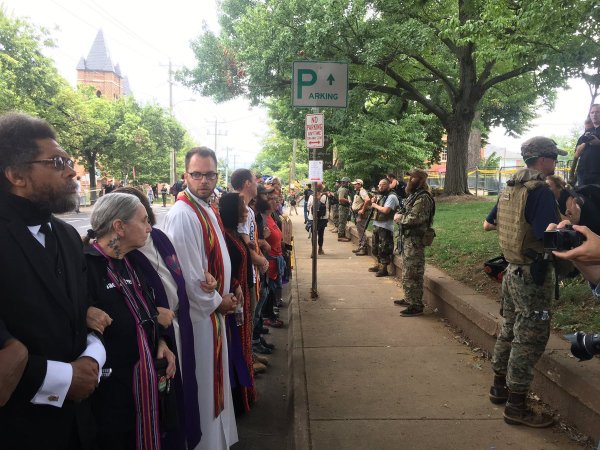
In light of the hate and violence seen this past weekend in Charlottesville, Virginia, I feel it’s important to raise again an issue which is frequently debated both in Pagan and Religious Naturalist circles: the relationship between religion and politics or between spirituality and activism.

TO READ THE REST OF THIS ARTCLE CLICK HERE.

Yes, I Drove My SUV to the Environmental Protest

This past weekend, my teenaged daughter and I joined hundreds of protesters on the streets of Lincoln, Nebraska to protest the KXL pipeline. To get there, we took a bus from Chicago with other activists. As we rode the bus 12 hours, I was conscious of the fact that we were using fossil fuel to go to a protest of the fossil fuel industry. I chose to take the bus instead of driving (which would have been shorter and would have spared by knees) in part because it was the more environmentally responsible choice, i.e., the cumulative impact of taking the bus was less than everyone driving individually. But I’ve driven to other protests before. Continue reading “Yes, I Drove My SUV to the Environmental Protest”

“You’re Not Fucking Gandalf”: 12 Movies to Remind You That Pagans Need to Grow Up

I’ve been slowly coming around to the idea that “magic” is a word that intelligent people can use in a meaningful (albeit nuanced) way.  But then I come across listicles like John Beckett’s recent “12 Movies to Inspire Your Magic” and I go back to square one.

I swear, I tried not to write this post.  I put in on the back burner.  I slept on it.  But Beckett’s post keeps popping up in my FB feed (probably because his listicle-loving editor, Jason Mankey, keeps promoting it).  So here goes …. Continue reading ““You’re Not Fucking Gandalf”: 12 Movies to Remind You That Pagans Need to Grow Up”

Lughna-say-what? What to Call This Pagan Holiday

The Pagan Wheel of the Year bugs me.  The timing of the cross-quarters bugs me.  The meaning attached of several of the eight stations bugs me.  And the names of most of the days bugs me.  Right, now I’m just going to focus on Lughnasadh, though, since it’s right around the corner. Continue reading “Lughna-say-what? What to Call This Pagan Holiday”

Losing My Religion: The illusion of choice in religious leave-taking

That’s me in the corner
That’s me in the spotlight
Losing my religion
Trying to keep up with you
And I don’t know if I can do it
Oh no, I’ve said too much
I haven’t said enough

— “Losing My Religion”, R.E.M.

Continue reading “Losing My Religion: The illusion of choice in religious leave-taking”

Why I’m Boycotting Lughnasadh Again

I remember when I was in high school and Indiana changed its license plate to include the phrase “Amber Waves of Grain”.  It pissed people off.  I mean, really pissed people off.  Because in Indiana, we grow corn and soybeans, not wheat.  While technically corn is a grain, it’s not amber.  While the phrase was poetic, it just did not speak of “home” to the people of the Hoosier State.  That’s kind of how I feel about Lughnasadh. Continue reading “Why I’m Boycotting Lughnasadh Again”

10 Books that Shaped My Spiritual Journey (Paganism and Beyond)

I love books.  I probably feel more at home bookstores and libraries than I do in my own house.  Books have had a profound influence on my spiritual evolution.  In fact, I can mark certain spiritual transitions by the books I was reading.

This is the second of two posts about the books that have served as markers on the path of my spiritual journey.  The first part consisted of the books that influenced me before I was Pagan.  This list begins with my discovery of Paganism.  There’s actually only a couple of books that are Pagan, per se, and one of them is a history book, which probably says something about my Paganism.

Note, this is not a list of my favorite books, but books that changed the course of my religious life.  The dates below are the dates I read the books (to the best of my recollection), not the dates of publication. Continue reading “10 Books that Shaped My Spiritual Journey (Paganism and Beyond)”

10 Books that Shaped My Spiritual Journey (Before Paganism)

I love books.  I probably feel more at home bookstores and libraries than I do in my own house.  Books have had a profound influence on my spiritual evolution.  In fact, I can mark certain spiritual transitions by the books I was reading at the time.

This is the first of two posts about the books that have served as markers on the path of my spiritual journey.  This first part lists the books that impacted me before I discovered Paganism.  This is not a list of my favorite books, but books that changed the course of my religious life. The dates below are the dates I read the books (to the best of my recollection), not the dates of publication. Continue reading “10 Books that Shaped My Spiritual Journey (Before Paganism)”

Our Fear Of Black Men Is Racist, And It Killed Philando Castile

I was raised to be afraid of Black men. This was communicated in many subtle and not-so-subtle ways, from my sweet-as-pie grandmother whispering the word “Black” like she was afraid one of “them” would hear her, to the ways our media, from entertainment to the news, portray Black men as dangerous.

This fear of Black men was perpetuated by unfamiliarity. I grew up in the rural Midwest, in a middle class family. The neighborhoods I lived in and the schools I went to were almost entirely white. I interacted with Black people only in superficial ways in public. And except for my best friend in second grade, I had no Black friends. Though I was taught to be “colorblind” and to abhor (overt) racism, I had very little meaningful contact with Black people. As a result of this combination of racist messaging and unfamiliarity, I developed a racist fear of Black men.

It’s shameful. I would have denied it if anyone accused me of it. But it’s true. It’s real. And it’s not just me. Studies have shown that Black men are generally perceived as more threatening than White men, even when the only difference is the color of their skin. At the same time, the reality is that it is Black men who are really in danger. Black men are in much more danger around Whites than Whites are around them. This is becoming overwhelmingly clear as video after video of police shooting Black men is released.

To read the rest of this article, click here.

An Earthseed Solstice: Festival of the Teacher

Festival of the Teacher

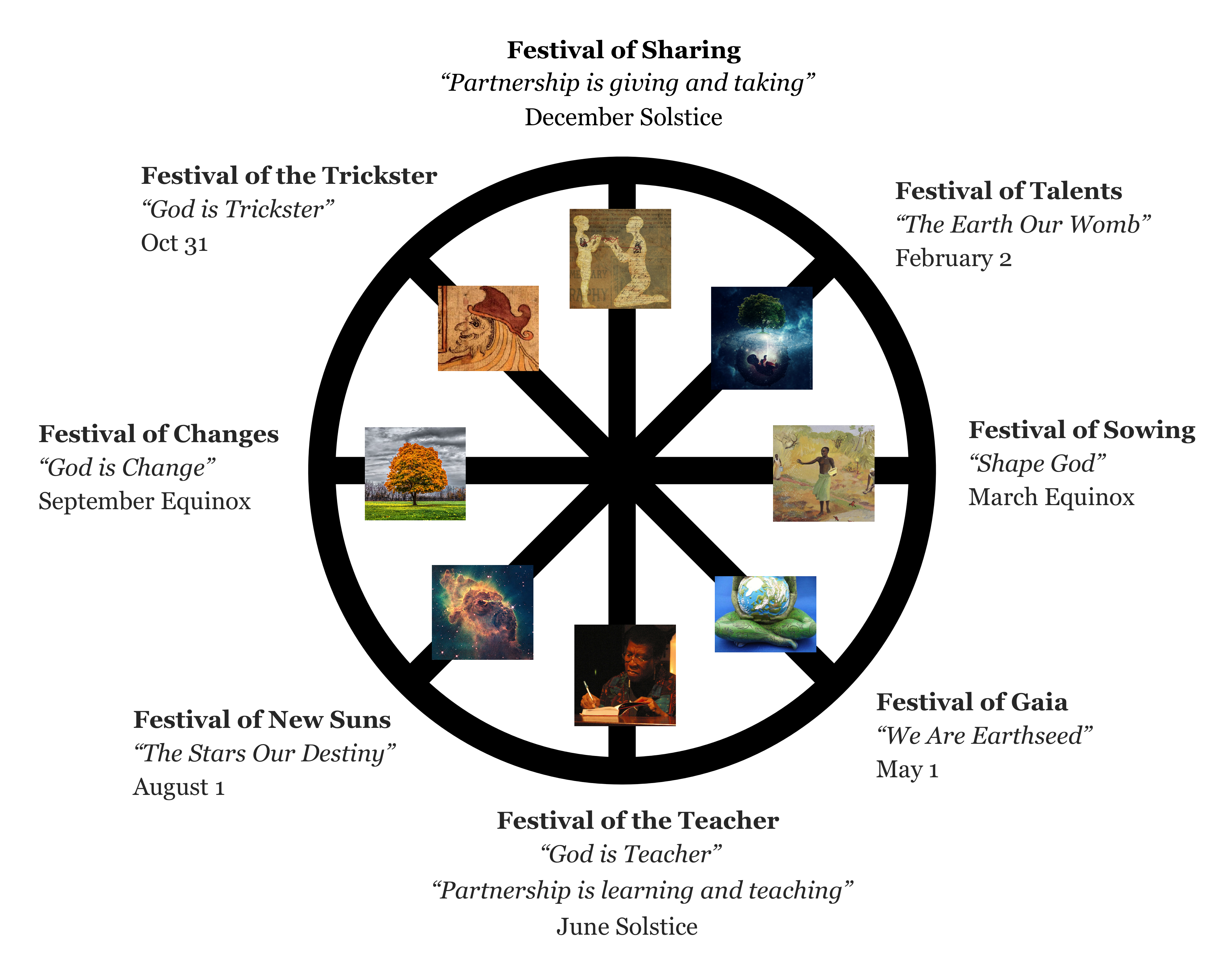
Earthseed is a fledgling Pagan tradition inspired by the science fiction of Octavia Butler, especially the Parable of the Sower and the Parable of the Talents.  Earthseed’s liturgical calendar follows the Pagan Wheel of the Year, but the celebrations have unique associations.

Earthseed Calendar
Continue reading “An Earthseed Solstice: Festival of the Teacher”

Plagiarism is the Highest Form of Praise

I once heard Aidan Kelly tell a story about attending a Pagan handfasting, where he heard words which he had written years before rehearsed by the ritual participants. But rather than crediting Kelly, the ritual leader said the text was ancient Pagan lore. It must have been an odd mixture of jealousy and pride that Kelly felt.

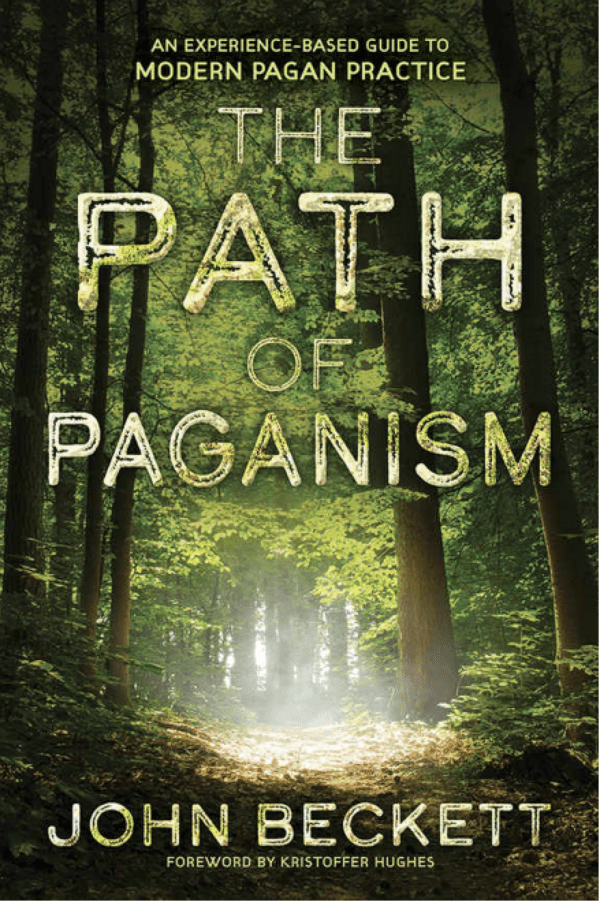
I felt a little of that recently when I perused John Beckett’s recently published book, The Path of Paganism.  I will be writing a more detailed review in a subsequent post, but I wanted to quickly address something that popped out at me.  In his book, Beckett writes about the “Four Centers of Paganism”, a model for understanding the Pagan community not in terms of a single center or core, but rather multiple centers: Nature, the Gods, the Self, and Community: Continue reading “Plagiarism is the Highest Form of Praise”

How a Hobbit Would Celebrate the Summer Solstice

Midsummer in the Shire

This year, the summer solstice falls on June 20 or June 21, depending on your time zone. The summer solstice is the longest day of the year and the apogee of the light. In the Neo-Pagan religious tradition, the summer solstice is called “Litha”.  It is one of eight holidays on the Neo-Pagan Wheel of the Year.

The name “Litha” is first found in the writings of the the 8th century monk, the Venerable Bede, who recorded that “Litha” was Anglo-Saxon name for the intercalendary time between June and July.  But the reason why Neo-Pagans use the word “Litha” has less to do with an 8th century monk, and more to do with Hobbits.

Yes, Hobbits.

To read the rest of the article at the Huffington Post, click here.

The Foundations of Modern Paganism, Part 1: Was Gerald Gardner a Jungian?

Jason Mankey and I are both amateur Pagan history nerds.  One thing we often disagree about is the importance of Gerald Gardner in the history of contemporary Paganism.  In a recent post entitled, “Magick & Deity are Two of the Foundations of Modern Paganism“, Jason Mankey argues that “almost all early Modern Paganisms contained two rather noticeable traits: belief in magick and/or deity.”  I would agree, with this caveat: that the term “deity” is undefined.  If you’re going to claim that a belief in deity is one of the foundations of modern Paganism, then it’s important to be clear what you mean by “deity”. Continue reading “The Foundations of Modern Paganism, Part 1: Was Gerald Gardner a Jungian?”

How Wonder Woman Both Perpetuates and Challenges Christian Dualism

I went to see Wonder Woman last night … for the second time.  It’s not what I would call a “great movie”, but it is great fun.  (And I have a bit of a crush on Gal Gadot’s Wonder Woman.)  If you want to a read a good review of the film from a Pagan perspective, check out Heather Greene’s article at The Wild Hunt, “Of gods and love: a discussion of DC’s new film Wonder Woman.”

Christian Revisionism in Wonder Woman

I have very few criticisms of the film, but one thing that jumped out at me was the characterization of the villain, Ares, the god of war.  Ares’ backstory comes near the beginning of the film.  We are told that Zeus created mankind righteous and good. But Ares, the God of War, grew envious of his father’s new creation and “poisoned their hearts with jealousy and suspicion,” encouraging them to war. That’s when Zeus created the Amazon women to influence men’s hearts with love and restore peace on earth. It worked, but only for a time, and Ares waged a war against the gods, killing them one by one, until Zeus used the last of his power to defeat Ares.

This might not be obvious to someone who is still steeped in a Christian paradigm, but to a Pagan like me, this is obviously a Christianization of Greek myth, with Zeus taking the role of the Christian God and Ares taking the role of Satan — making Wonder Woman a female Jesus.  Similar Christian revisionism can be seen in the movie Clash of the Titans and the animated movie Hercules, in which Zeus and Hades (god of the underworld) take on parallel roles. Continue reading “How Wonder Woman Both Perpetuates and Challenges Christian Dualism”

3 Reasons to Seek Out Profound Religious Experiences

In a recent post entitled, “What American Gods Tells Us About the Need for Religious Ecstasy“, I speculated that one of the reasons Neo-Paganism seems to be on the decline and Devotional Polytheism on the rise, is that the former no longer offers the experience of ecstasy or transcendence to many people, while the latter does.  In response, Rua Lupa argued that “the search for transcendence or ecstasy in order to have a ‘deep religious experience’ is frankly hedonistic.”

I am sympathetic to the argument that pursuing “peak experiences” for their own sake can be problematic.  At its most benign, “blissing out” may be “purely aesthetic”, but at worst, it can resemble drug seeking behavior.  Nevertheless, I believe there are real benefits to seeking out mystical or ecstatic states. Continue reading “3 Reasons to Seek Out Profound Religious Experiences”

I am an atheist when the wind is north-northwest.

I am an atheist north by northwest.

But when the wind is southerly, I know a deity from a deist.

If you were to tell me your god is a person like you, I would tell you I am an atheist.

But if you tell me you believe in no god, I will testify the world is full of them.

If you were to tell me there is only one true god, I would tell you I contain multitudes.

But if you tell me your gods are many, I will tell you I have faith in an unseen unity.

If you were to tell me my gods are just in my head, I would point to the earth and say, “Praise!”

But if you tell me your gods are real, I will point to your head and say, “Behold!”

If you were to tell me your god is good, I would offer to sell you some more.

But if you tell me your gods are dark, I will remind you of the words of the oracle: “Know thyself.”

If you were to tell me you don’t know about the gods, I would call you wise.

But if you tell me you don’t care about the gods, I will not call you at all.

Worshiping the Dark at the Summer Solstice

“Light though thou be, thou leapest out of darkness; but I am darkness leaping out of light, leaping out of thee!”

— Moby Dick, Herman Melville

The Summer Solstice occurs at almost midnight on June 20th in the Northern Hemisphere this year.  It is the longest day of the year and the shortest night.  Summer finally begins here in the Midwest, both meteorologically—with the warming of the air and the increasing occurrence of sunny days—and socially—with the end of the school year.  This is why I don’t call the day “Midsummer.”  For me, “Midsummer” falls on Lughnasadh in early August. Continue reading “Worshiping the Dark at the Summer Solstice”

What American Gods Tells Us About the Need for Religious Ecstasy

American Gods is a novel by Neil Gaiman, which has now been made into a (really good) TV series on Starz.  The premise of American Gods is that the people who came to the American continent–including conquerors, slaves, and immigrants–brought with them their gods … literally.  The gods now walk around disguised as human beings.  But the old gods have weakened as belief in them disappeared, and they now battle with new gods, gods of the internet and credit cards and super highways. Continue reading “What American Gods Tells Us About the Need for Religious Ecstasy”

Literal Minded Atheism

Yeah, we do it too.

Yesterday, I posted an essay about literal-minded polytheism.  It’s likely to upset some polytheists (especially those who don’t read beyond the title), because they will read it as an attack on their belief.  Actually, what I had intended in the article was to bracket the question of whether or not the gods are “real” and talk about the criteria we use to call something “real.”  My thesis was that some polytheists (not all, by any means) have a very “disenchanted” way of talking about reality.  By “disenchanted,” I mean they define what is real in terms of it’s level of disconnection from everything else.

But of course, the same could–and should–be said about many atheists as well.  Disenchanted discourse is not limited to theists.  In the same way that theists insist that their gods are “really, really real,” atheists insist that the gods are “really, really not real.”  And what both sides seem to have in mind is a very objective–and hence, disenchanted–definition of reality.  The assumption that both theists and atheists make in these arguments is that objective reality–reality in which the observer is separated from the observed–is somehow more real than subjective reality.

Continue reading “Literal Minded Atheism”

Literal Gods Are for the Literal Minded: Re-Enchanting the Gods

“Really, really real”

Here and there in the tiny echo chamber that is the Pagan blog-o-sphere, I am once again hearing repeated the false dichotomy of archetypes vs. “real gods.”  As in, “My gods aren’t just archetypes. They are real…literal, distinct, independent gods.”

With the recent premiere of the series American Gods (which is awesome, by the way), I anticipate we’re going to be hearing a lot more talk like this–especially considering the influence the publication of the book American Gods had on the growth of Pagan polytheism.

Continue reading “Literal Gods Are for the Literal Minded: Re-Enchanting the Gods”

The Shame of Being a “Non-Practicing Pagan”

I remember when I left the Mormon church, I didn’t want to admit to anyone that I had been a less than perfect Mormon.  You see, when you leave the LDS Church, the people who stay start looking for all kinds of reasons why you left, reasons which have to do with your own moral failings.  They can’t admit that anything might be wrong with the Church, so something has to be wrong with you.

But I was a less than ideal Mormon.  I didn’t obey all the rules, I didn’t pray as often as I was supposed to, and so on.  Now I have the perspective and wisdom to recognize that nobody obeyed all the rules or prayed as much as they were supposed to.  Well, maybe somebody did.  But those people are scary.  And they’re also a very small minority.

The same is true of Pagans, I think.  I suspect that very few of us are practicing with as much consistency as we claim to.  And that’s okay. Continue reading “The Shame of Being a “Non-Practicing Pagan””

The Problem and the Promise of Paganism, and Why One Looks a Lot Like the Other

The Problem of Paganism

The question why I am “still” a Pagan implies that there might be reasons why I would not want to identify as Pagan any longer.  And there are.  I believe that Paganism has the potential to transform our relationship with the earth, with each other, and with our deeper selves—but a lot of the time, I cannot relate to other Pagans.

Continue reading “The Problem and the Promise of Paganism, and Why One Looks a Lot Like the Other”

Nothing to see here folks. Paganism is fine, really, just fine.

Paganism is not dying.  Paganism is NOT dying.  PAGANISM IS NOT DYING!

Why don’t you believe me?

People who are telling you otherwise (like He Who Shall Not Be Named at Patheos) just want attention.  Attention whores!

Believe me, Paganism is fine.  It’s just fine.  I mean, it’s okay.  Really. Continue reading “Nothing to see here folks. Paganism is fine, really, just fine.”

Marching from Day 1 to Day 100

This past weekend, I marched with about 200,000 other people in the People’s Climate March in Washington, D.C.  Together with other members of 350 Indiana-Calumet, I helped organize a bus of about 50 people from Northwest and Northcentral Indiana to attend the D.C. march. Continue reading “Marching from Day 1 to Day 100”

Announcing NaturalPagans.com

Today is the official launch of NaturalPagans.com!

Contributors are Pagans from a variety of backgrounds, but all of whom have adopted a naturalistic approach to our spirituality. We celebrate the natural world, cultivate personal relationships to the land, and follow to the scientific method. We embrace explanations of the world that rely on natural causes rather than supernatural ones, and we practice a healthy skepticism towards such topics as deities, spirits, and magic.

While we may differ from many other Pagans in our attitude toward the supernatural, we are another one of the many varied and vibrant Pagan paths under the Pagan umbrella. We invite all Pagans to join us in our efforts to use evidence-based solutions to create a just, healthy and sustainable world for future generations.
Continue reading “Announcing NaturalPagans.com”

Why Contemporary Paganism Deserves to Die

Does Paganism Deserve to Survive?

I don’t know whether contemporary Paganism is dying or not.  But it’s definitely changing.

Contemporary Paganism is being squeezed by the same social, economic, and technological pressures that all other contemporary religions are struggling with.  Generational differences with Millennials.  Economic inequality. The internet.

Which got me thinking, why are we bothering to struggle?  Why not just let entropy take its course? Continue reading “Why Contemporary Paganism Deserves to Die”

Pagan Reflections on Another Easter Passed

In spite of having left Christianity behind 17 years ago, I found myself at another Easter service this year.

I’ve been Pagan for about 15 years, but in recent years I have been drawn back to Easter and Christmas services … but not for the reasons you might think. It not because many of my friends and family are Christian.  And it’s not because of any residual or resurgent Christianity on my part.

It’s because of the Pagan-ness of these holidays.
Continue reading “Pagan Reflections on Another Easter Passed”

It’s been 50 years. And what have Pagans accomplished?

(Image courtesy of Mike Mason,  Pagan Pride UK, Nottingham, 2012.)

Happy Birthday Paganism!

Contemporary Paganism, as it exists today, began with the Counterculture movement of the 1960s and 1970s. Religious studies scholar, Sarah Pike dates the origins of contemporary Paganism to 1967, the year that Frederick Adams incorporated Feraferia and the New Reformed Order of the Golden Dawn was founded. That same year, the Church of All Worlds filed for incorporation as a the first Pagan “church”.

Which means that this year, 2017, is the 50th anniversary of contemporary Paganism! So let’s look back at what we have accomplished over the past five decades. Continue reading “It’s been 50 years. And what have Pagans accomplished?”

Contemporary Paganism Celebrates its 50th Anniversary

While the origins of some forms of contemporary Paganism, like Wicca and Druidry, go back further, the beginning of what is called the “Pagan movement” can be dated to 1967* — making this year the 50th anniversary of contemporary Paganism.

Click here to read the rest of the article on The Huffington Post.

Eight Ways Pagans Can Celebrate Earth Day

For many contemporary Pagans, Paganism takes the form of a nature religion or earth-centered spirituality. According to Religious Studies scholar, Michael York, a nature religion is one that has “a this-worldly focus and deep reverence for the earth as something sacred and something to be cherished.” Not surprisingly then, Earth Day (April 22 this year) is a holy day for many Pagans. Here are some ways that we Pagans can celebrate Earth Day. Continue reading “Eight Ways Pagans Can Celebrate Earth Day”

Self-Deception is the Secret Sauce: A Response to David Pollard

Damn, I thought the Patheos controversy was cooling off. But I guess not.

David Pollard who manages, Nature’s Path, the UU-Pagan hub at Patheos, just posted an essay in which he attempts to defend his decision to stay at Patheos by attacking those who left.  I feel compelled to respond because, as the Executive Director of CUUPS, David has quite the bully pulpit from which to spread his attacks.* Continue reading “Self-Deception is the Secret Sauce: A Response to David Pollard”

Update on the Patheos Exodus

Patheos continues to struggle to reframe the narrative around the exodus of what is now more than two dozen authors from Patheos Pagan.  (About 16 active bloggers left Patheos and 20 current and former bloggers have requested that their writing be removed from the site.)

Most recently, I noticed two significant changes that had been made to public information sites related to this controversy. Continue reading “Update on the Patheos Exodus”

Dear Patheos …

Jeremy McGee
President/COO Patheos, Inc.

Dear Patheos,

We the undersigned former and current Patheos Pagan contributors hereby request that you remove our names, likenesses, and our intellectual property, including our writing, art, and images, from your site. We previously gave Patheos license to publish our writing, but Patheos is no longer the company that we contracted with. Continue reading “Dear Patheos …”

Where is the rest of The Allergic Pagan?

This blog was previously hosted by Patheos.  Currently, Patheos is holding the rest of my blog hostage. I’m ambivalent about directing you to that site, as I don’t want to encourage traffic there. However, almost a 1000 posts, representing 6 years of my writing can be found there. So, if you’re looking for the rest of The allergic Pagan, you can find it there.

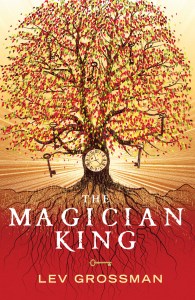
Longing and Grace in Lev Grossman’s The Magician King

God speaks to each of us as he makes us,
then walks with us silently out of the night.
These are the words we dimly hear:
You, sent out beyond your recall,
go to the limits of your longing. …

— Rilke

You, the great homesickness I could never shake off …

— Rilke

I know I promised a follow-up to my post about Lev Grossman’s book The Magicians.  I had a lot of thoughts for a follow-up, but then I picked up Grossman’s sequel, The Magician King, and I was lost.
cover-uk

(Warning: while I will not give the whole book away, there may be some spoilers in what follows.)

Quentin and the Hero’s Quest

The Magician King is a worthy sequel to The Magicians.  In it, the protagonist, Quentin, finally learns the lesson that he did not learn in the first book: that the sense of meaning that he longs for is not to be found in magic or in other magical worlds, but in an inner transformation for himself.   At the end of the book, Quentin is standing literally on the precipice of yet another (even more) magical world, when he realizes the truth of the statement made by Ember, the god of the magical world of Fillory: the hero is not the one who wins the prize; the hero is the one who “pays the price”.

The scene reminded me of the trailer for the just-released Iron Man 3 movie, in which the Mandadrin tells Tony Stark: “I’m going to give you a choice: Do you want an empty life, or a meaningful death?”  Being the hero means dying.  (This may be a literal or symbolic death, and the hero may return, but he must first die.)  As Hemingway said: If the hero has not died, the author just has not finished the story.  (For more on Quentin and his quest for meaning, see my previous post on The Magicians.)

Julia’s Story

But The Magician King is at least as much about Julia, as it is about Quentin, and its Julia that I want to focus on.  Julia is a character that only makes three appearances in the first book: first as Quentin’s teenage friend and unrequited love, second as a tortured emo-type begging Quentin for the magic he has, and finally as a mysterious and powerful “hedge witch” (a magician who has gained magic power outside the official structure of magic training academies like Brakebills).  The Magician King shifts back and forth between the main drama of Quentin and Julia’s quest to save Fillory and flashbacks to Julia’s past, where Grossman fills in the gaps between the three appearances she makes in The Magicians.

Julia is a different character than Quentin.  While both are geniuses, Julia is much more the rationalist than the romantic Quentin.  She excels at math and science and she prefers to know things than feel things.  She is a sensing-thinking type on the Myers-Briggs scale.  Julia, it turns out, was denied admission to Brakebills, the magical academy that Quentin attended.  She gives up college, family, and any hope of a normal life as she sets out to find her own magic.  Eventually, she discovers an underground magical community on her own.  She quickly rises to the top of the community, gathering spells or “levels”.

The creme de la creme, she discovers, is a handful of Mensa-type geniuses like herself who live in villa in Provence calling themselves “Free Trader Beowulf” (an allusion to the Traveller role playing game of the 80s).  When the group maxes out on the available magical knowledge (250 “levels”) and works out all the possible permutations, they then try to take their power to the next level — the level of the gods.  And here, in the last quarter of the book, is where Grossman enters territory that will seem very familiar to the contemporary Pagan polytheist.

Julia and the Quest for Healing

Julia and her new friends theorize that the gods and monsters of the world’s mythology must be beings who were once magicians but who took a quantum leap in their knowledge and power, and that divine power is just another form of magical technology.  So they set about to find one god in particular, a goddess related to Diana, Cybele, Isis, and the Black Madonna of Chartres.  They call her “Our Lady Underground” or “O.L.U.”  (Only a group as pedantic as the Free Traders would give a goddess an acronym for a name.)  Pagans will recognize O.L.U. as the archetypal Mother Earth Goddess.

What I found most interesting, however, was how this group of super-intellectual, left-brained, atheistic, hedonistic, and power-seeking magicians, whose “intellectual gag reflex” is triggered by even the mention of religion, gradually becomes transformed by their search for Our Lady Underground.  They first set out to “strip away all the reverence and the awe and the art” from their subject, and approach it coldly, intending to “study gods the way an entomologist studies insects”.   In spite of this, the nature of their goal slowly transforms the Free Traders:

“A new atmosphere had settled over the house at Murs.  It had always been a basic tenant thee that luxury and comfort were integral parts of the magical lifestyle.  Not just for its own sake, but as a matter of principle.  As magicians–Murs magicians!–they were the secret aristocracy of the world, and Goddamn it, they were going to live like it.

“Now that was changing.  Nobody said anything.  And certainly no edicts came down from Pouncy [the group’s leader], but the atmosphere became more spartan.  The serious nature of their investigation was cooling and tempering their collective mood.  Less wine came out with dinner, and sometimes none at all.  The food became plainer.  Conversations were conducted in hushed tones as they would be in the halls of a monastery.  And an attitude of seriousness and austerity was taking root among them.  Julia suspected some of the others of fasting.  From a high energy magical research center, Murs was turning into something more like a religious retreat.”

One night Julia has a powerful dream of O.L.U.:

“She came in the form of a statue of herself.  The one from the crypt at Chartres, stiff and cold.  The statute gave Julia a wooden cup.  Sitting up, Julia lifted it to her lips and drank like a ferverish child being given medicine in bed.  The liquid was cool and sweet, and she thought of the Donne poem about the thirsty Earth.  Then she lowered the cup, and the goddess leaned down and kissed her, with her hard, gilded icon’s face.

“Then the statute broke apart, its outside crumbling like an eggshell, and from inside it stepped the true goddess, clear at last.  She was grave and unbearably lovely, and she held her attributes in either hand: a gnarled olive staff in her right, a birds nest with three  eggs in it in her left.  Half of her face was in shadow, for the half of the year she spent underground.  Her eyes were full of love and forgiveness.

“‘You are my daughter,’ she said, ‘my true daughter. …’”

That same night, Pouncy finds himself actually praying, with spectacular results.

It is not initially clear what magic represents for Julia.  For Quentin, magic represented meaning.  But it seems to mean something else to Julia.  Julia had been broken by her discovery of magic and her subsequent denial of access to it.  This wounding sends her on a quest for magical power through the the magical underground.  She intends to take, by sheer force of will, what had been denied to her.  But, like Quentin, she is never satisfied.  The search consumes her, and she cuts all ties with family and friends.  Her behavior resembles that of an addict, and it takes its tole on her body and her mind.

Eventually though, she finds a home with the Free Traders.  Like her, the Free Traders are all wounded individuals.  (Something common among the Brakebills alumni actually.)  One condition for entrance into the Free Traders is that one be clinically depressed or disturbed, a condition which one must prove by producing one’s prescriptions.  One day, just before the group invokes Our Lady, Pouncy admits to Julia that what he hopes to gain from O.L.U. is not power, but healing: “I want her take me home with her,” he says.  As it turns out, Julia desires the same thing.

Longing and Grace

In the end, I think the Grossman’s Magicians series is about longing, a longing that I think is very common, perhaps universal.  It is a longing that we sometime project outward and experience as a sense that there is something “wrong” with the world.  It is a longing which the both Quentin and Julia seek to satisfy with profane magic, only to discover that this kind of magic does not fill the hole in their soul.

This longing is, I think, a longing for William James’ “more” — more life — what C.S. Lewis calls “that other larger, stronger, quieter life” (Mere Christianity).  “Not God, but life,” writes James Leuba, “more life, a larger, richer, more satisfying life, is, in the last analysis, the end of religion.  The love of life, at any and every level of development, is the religious impulse.”  (The Monist, vol. 11, p. 572, quoted in William James, The Varieties of Religious Experience).  D.H. Lawrence describes this “one underlying religious idea” thusly:

“the conception of the vitality of the cosmos, the myriad vitalities in wild confusion, which still is held in some sort of array : and man, amid all the glowing welter, adventuring, struggling, striving for one thing, life, vitality, more vitality : to get into himself more and more of the gleaming vitality of the cosmos. That is the treasure. The active religious idea was that man, by vivid attention and subtlety and exerting all his strength, could draw more life into himself, more life, more and more glistening vitality, till he became shining like the morning, blazing like a god.”

(D.H. Lawrence, Etruscan Places).  And that is precisely what Julia and the Free Traders each seem to be searching for — godhood, not as an expression of power, but of a “larger, richer, more satisfying life”.

But if there is one thing that the religious sages and mystics agree on, it is this: that this “more”, this “other”, has to meet us half way.  As Heidegger famously said in his Der Spiegel interview:

“Philosophy is not able to effect a transformation of the world.  This is not only true of philosophy, but of all human thought and endeavor. Only a god can save us. The sole possibility that is left for us is to prepare a readiness, through thought and poetic creation for the appearance of the god.”

And this, I think, is what separates religion from profane magic.  Like technology, profane magic is a function of an isolated subject exerting his or her will on an objective, inert world.  But religion, as the etymology of the word implies, is a relation between two subjects, Buber’s “I-Thou”.  And this why the Free Traders’ search takes the religious turn.  It is not more power that they want — it is more life.

I recently attended a lecture of the Central Indiana Friends of Jung society given by Donnamarie Flanagan entitled “Keep the Longing Alive and the Transcendent Function Will Come”.  The transcendent function is Jung’s term for the transformative power of the autonomous psyche to unite opposites (a conscious thesis and an unconscious antithesis) through the creation of a new symbol (synthesis).  It can be likened to the Christian Holy Ghost.  It is through the transcendent function that the process of individuation (becoming a whole person) is effected.  Flanagan writes in the handout she gave us:

“The longing that can be named is not the deep longing of the soul.  It is often imagined as a profound homesickness, but where is home?  No more than we can name the object of our longing, can we achieve it by effort.  The best we can do its wait for the transcendent function’s work of grace to provide the linking symbol.  Yet, the symbol itself points beyond itself toward mysterium.”

In Jungian terms, the sense of longing that we feel is the “religious function” of the psyche.  It is a longing for reunification with the Self — Jung’s God-concept — which is often symbolized by the Mother archetype.  She represents

“homecoming, shelter, and the long silence from which everything begins and in which everything ends. Intimately known and yet strange like Nature, lovingly tender and yet cruel like fate, joyous and untiring giver of life-mater dolorosa and mute implacable portal that closes upon the dead.”

(CW 9, P 172).  She is Rilke’s “great homesickness” that we can never shake off.  This is what the Free Traders (at least Julia and Pouncy) long for, and this is, I think, why their quest becomes a religious one.

We try to kill this longing in numerous ways, with food, alcohol, television, and myriad other distractions and obsessions.  But, according to Flanagan, we must keep this sense of longing alive.  While we cannot unilaterally effect the reunification that we desire, which can only happen by the mysterious grace of the autonomous psyche, we need to consciously create and hold a space where this transformation can happen.  This is what I think Heidegger meant when he spoke (above) about “preparing a readiness”.

This can be one function of ritual, of prayer, and of a kind of sacred magic.  The purpose of this kind of prayer would not be to satisfy our wants, but to actually draw out our most fundamental longing.  “Give us this day our daily hunger,” should be our daily prayer, says Flanagan (quoting Gaston Bachlard).  And this can also be the purpose of a different kind of magic from the profane magic that Quentin learns a Brakebills and Julia learns through the magical underground.  It is not magic as technology, but magic as an encounter with that “other”, that “more”, which gives life its vitality and its sense of meaningfulness.  It is a magic which cannot be forced.  It is a magic which happens in the place where longing and grace intersect.

Blog at WordPress.com.

Up ↑